



The label says 0 mg. You switched to it on purpose. So you're nicotine-free, right?
Probably. Not definitely. Here's what happened when independent labs actually tested liquids sold as nicotine-free.
Short answer
Usually, but not always. When Australian researchers tested ten e-liquids sold as nicotine-free in 2019, six contained nicotine, three at levels similar to low dose nicotine liquids. Earlier US testing also found traces in products labelled nicotine-free. And even a correctly labelled 0 mg vape still heats a liquid into vapour.
What the lab tests found
The fair summary: most products are probably labelled correctly. Some aren't. And you can't tell which from the label.
Associate Professor Alexander Larcombe4
Here's why labels can be wrong
Nicotine-free liquids are often made in the same places as nicotine liquids, and quality control varies a lot. The 2015 researchers put it down to insufficient manufacturing quality control.2
And nicotine isn't the only question
Even a perfectly labelled 0 mg vape heats a liquid into vapour. The Australian researchers pointed out that ingredients considered safe to eat haven't been well studied once heated and inhaled.4 A 2022 review found clear evidence of harm from diacetyl and cinnamaldehyde in heated e-liquids, and too little data on most other flavourings.5
If you're keeping a 0 mg vape
- Buy from established, regulated shops in your country.
- Prefer brands that publish independent lab results per batch.
- Skip cheap, unbranded or imported liquids.
- Treat it as a step, not the destination, if your goal is to stop vaping.
Or skip the liquid entirely
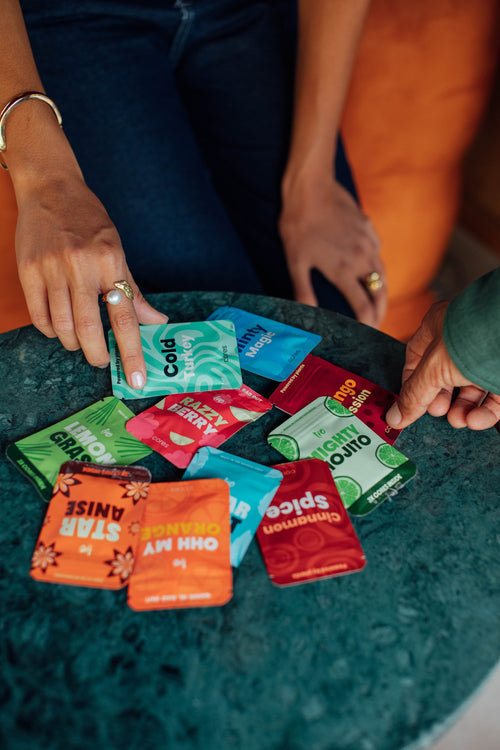
If what you really want is the draw and the flavour, flavoured air and pressurised air devices don't heat a liquid at all. Full disclosure: we make one of those. See all four kinds of “air vape”.
Remember this
Frequently asked questions
Do nicotine-free vapes have nicotine?
Most are probably labelled correctly, but independent tests have found nicotine in some products sold as nicotine-free.
Are 0 mg vapes safe?
They avoid nicotine if labelled correctly, but still heat a liquid into vapour, and the effects of heated, inhaled flavourings are not fully known.
Sources
- Larcombe A, et al. Nicotine and other potentially harmful compounds in “nicotine-free” e-cigarette liquids in Australia. Medical Journal of Australia. 2019. www.mja.com.au
- Goniewicz ML, et al. Nicotine levels in electronic cigarette refill solutions: a comparative analysis of products from the US, Korea and Poland. International Journal of Drug Policy. 2015;26(6):583 to 588. pmc.ncbi.nlm.nih.gov
- Wu M, et al. Presence of nicotine in marketed nicotine-free e-liquids for electronic cigarettes. BCIT Environmental Health Journal. 2017. journals.bcit.ca
- The Kids Research Institute Australia. “Nicotine-free” e-juice samples found to contain nicotine and harmful chemicals. 2019. thekids.org.au
- Review of 38 reports on flavoured e-liquids and the respiratory system, 2006 to 2021. PubMed Central PMC9590402. pmc.ncbi.nlm.nih.gov

Founder of Lio. Writes about habits and the products Lio makes. Has a commercial interest in this topic, which is why every claim here is sourced.
Lio is not a medical device, a smoking cessation aid or a treatment, and makes no health claims. This guide is general information, not medical advice. If you want help with nicotine dependence, speak to a pharmacist, GP or your national quit service.